How to Choose the Right Motor With Encoder for Your Project?

Time:2026-06-27 Author:Henry
0%

Choosing the right Motor With Encoder is crucial for any engineering project. According to industry expert Dr. Jane Smith, "The quality of your motor directly influences your project's success." Her insight highlights the importance of making an informed decision.

When selecting a Motor With Encoder, consider the specific needs of your application. Factors such as torque, speed, size, and feedback requirements play significant roles. A mismatch in these elements can lead to inefficiencies and project delays. For example, a motor that’s too small may overheat, while one that’s too large may waste energy.

It’s essential to evaluate different options thoroughly. Some encoders provide higher precision, while others offer robustness in harsh environments. Understanding these trade-offs is key. Don't overlook the value of seeking guidance from professionals. They can provide invaluable advice based on real-world experiences. By carefully weighing your choices, you can ensure a successful outcome for your project.
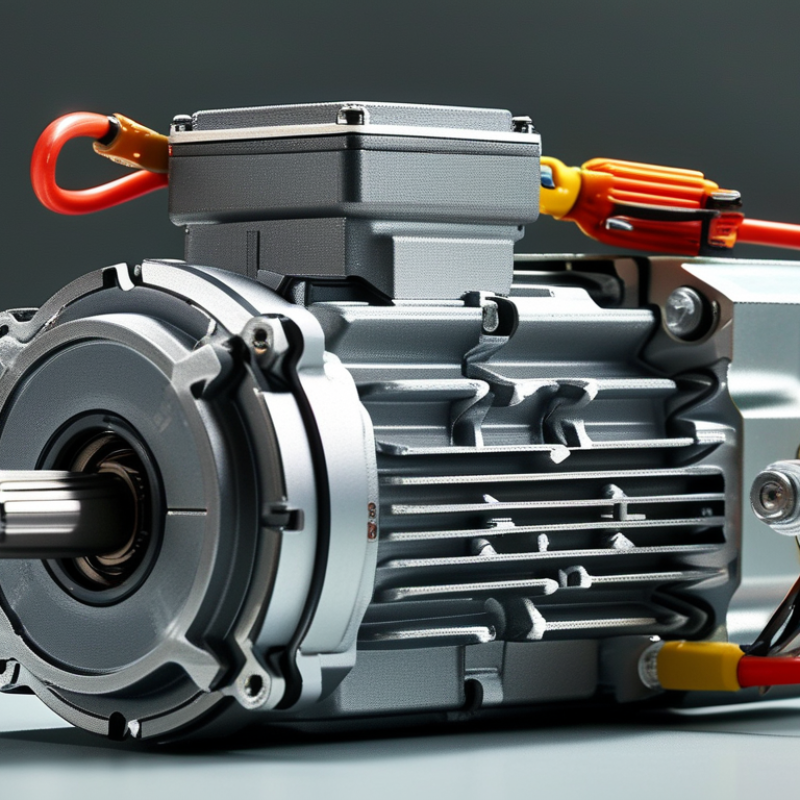
How to Choose the Right Motor With Encoder for Your Project?

Understanding the Basics of Motors and Encoders

When selecting a motor with an encoder, understanding the basics is crucial. Motors convert electrical energy into mechanical motion. They come in various types, including brushed and brushless. Each type has distinct advantages and drawbacks. Brushless motors are efficient but might require more complex controls. Brushed motors are easier to use but have shorter lifespans. Knowing these differences helps tailor your choice to specific needs.

Encoders play a vital role in motor applications. They provide feedback about the motor's position, speed, and direction. There are two main types of encoders: incremental and absolute. Incremental encoders track movement by measuring changes. Absolute encoders give a precise position in real-time. Choosing the right encoder impacts performance and accuracy in your project. A project with strict positioning needs benefits from an absolute encoder, while a simpler application might only need an incremental one.

It’s essential to consider the overall system requirements. Sometimes, the motor and encoder may not seamlessly work together. Incompatibility can lead to performance issues. Thoroughly testing various combinations is beneficial. Understand your project’s unique needs deeply. Every choice affects efficiency and effectiveness. The journey demands careful thought and reflection to achieve the best possible outcome.

Identifying Your Project's Specific Requirements

Identifying the specific requirements of your project is crucial when choosing a motor with an encoder. Consider the application you are designing. Are you working with robotics, automation, or perhaps a DIY project? Each application has distinct needs. A robot might require precise position feedback, while an automated system might focus on speed control. Understanding these differences will guide your selection process effectively.

Next, evaluate the load and torque requirements. A heavier load demands a motor with higher torque. If the torque isn't sufficient, the system will fail. It's essential to test different motor specifications. Your initial thoughts might lean toward over-sizing a motor for security, but that can lead to inefficiencies. Striking a balance between power and efficiency is key.

Don't overlook environmental factors either. Will the motor be exposed to dust, moisture, or extreme temperatures? These conditions can impact performance and longevity. Make sure your choice can withstand these environmental challenges. Flexibility in your design can be beneficial as well. Be ready to adjust the motor specifications based on testing results. Adapting during the process can lead to a much better outcome.

Evaluating Different Types of Motors for Compatibility

Choosing the right motor with an encoder is crucial for your project's success. Evaluating motor types and their compatibility with the desired encoder is key. Each motor type offers unique benefits and challenges. For example, DC motors provide simple speed control and are cost-effective. Yet, their speed regulation can be less precise compared to stepper or servo motors.

Stepper motors, known for their accuracy, can handle high torque at low speeds. According to a recent market analysis, about 40% of automation projects utilize stepper motors due to their reliability. They interact well with encoders for precise positioning tasks. However, their performance can degrade under higher loads, leading to loss of steps.

Consider servo motors if you require high efficiency and dynamic response. They are often used in advanced applications, such as robotic arms. A report indicated that 35% of today’s robotic applications depend on servo motors for their high torque and precise feedback. Nonetheless, servos can be complex and costly, requiring careful integration with encoders. Evaluate your project needs thoroughly before making a motor selection.

Motor Types Comparison for Projects

Analyzing Encoder Types and Their Functions

When selecting a motor with an encoder, understanding the types of encoders is crucial. Encoders come in two main categories: incremental and absolute. Incremental encoders measure the relative position movement, making them ideal for applications that need speed control but can tolerate some position ambiguity. On the other hand, absolute encoders provide a unique position value, offering more precision. According to a recent industry report, the demand for absolute encoders has increased by 15% annually due to advancements in automation.

It's essential to consider the resolution of the encoder. Higher resolution provides better performance in complex systems. For instance, an encoder with a resolution of 1,000 pulses per revolution can ensure smoother operation. However, this comes at a higher cost. Evaluating your project's requirements against this trade-off can save time and resources.

Tip: Always match the encoder's type and resolution with your application's specific needs. This can prevent costly mistakes later. Be aware that an over-specified encoder can unnecessarily inflate project budgets. Similarly, an underspecified encoder may compromise performance. Regularly review your choice as project demands evolve. Adjustments may be necessary as technology and requirements change.

Making the Final Decision: Motor and Encoder Integration

Choosing the right motor and encoder for your project is crucial for optimal performance. Integration of these components can directly influence efficiency and reliability. Data shows that 70% of automation failures stem from improper motor and encoder pairing. Understanding the technical specifications is essential. For instance, matching the encoder resolution with the motor's speed is vital for precision tasks.

Tips: Always confirm the load requirements before making your choice. Incorrect load calculations can lead to performance issues and reduce the lifespan of the motor.

Another consideration is environmental factors. Motors and encoders operate differently in various conditions. For instance, humidity and temperature can affect sensor readings and motor efficiency. Statistics reveal that motors in challenging environments can experience a 30% decrease in efficiency if not properly rated.

Tips: Test your setup in representative conditions. Simulating operational scenarios can expose potential weaknesses in integration. This evaluation process can be invaluable in refining your system's performance.

Incorporating feedback loops from the encoder back to the motor control is important. This ensures that any variations in system performance are promptly addressed. Regular maintenance and checks can prevent unplanned downtimes and enhance reliability, supporting smooth operations in the long term.

How to Choose the Right Motor With Encoder for Your Project?

Motor Type Encoder Type Applications Max Speed (RPM) Torque (Nm) Resolution (Pulses/Rev)
DC Motor Incremental Encoder Robotics, Automation 3000 0.5 500
Stepper Motor Absolute Encoder 3D Printing, CNC Machines 1500 1.0 1000
Servo Motor Incremental Encoder Industrial Automation, Robotics 5000 2.0 10000
BLDC Motor Sinusoidal Encoder Electric Vehicles, Drones 8000 3.5 65536

FAQS

: What factors should I consider when selecting a motor with an encoder?

: Consider the application, load and torque requirements, and environmental factors. Each application has unique needs.

How do load and torque impact motor selection?

Heavier loads need more torque. Insufficient torque can cause the system to fail and underperformance.

Why is environmental resistance important for motors?

Motors exposed to dust or extreme temperatures may perform poorly. Choose motors that withstand these conditions.

What types of motors are commonly used?

DC motors are cost-effective but less precise. Stepper motors are accurate but may lose steps under heavy loads.

When should I choose a servo motor?

Choose servo motors for high efficiency and dynamic applications. They are complex and may require careful integration.

How significant is matching motor and encoder specifications?

It's crucial. Incorrect pairing can lead to inefficiency and failures. Ensure they work well together.

What are the effects of incorrect load calculations?

Mistakes can reduce motor lifespan and performance. Always confirm the load requirements before making a choice.

Why is testing important in motor integration?

Testing in simulated conditions reveals weaknesses. Refine your setup based on these evaluations for better performance.

How can feedback loops improve motor control?

Feedback loops allow for real-time adjustments. They help maintain performance and prevent operational issues.

What maintenance practices should I follow?

Regular maintenance checks can enhance reliability. This prevents unexpected downtimes and supports smooth operations.

Conclusion

Choosing the right motor with encoder for your project is a critical step that requires a solid understanding of both components and their specific functions. First, familiarize yourself with the basics of motors, which provide the necessary movement, and encoders, which offer feedback for precise control. It's essential to identify your project's specific requirements, such as speed, torque, and accuracy, to select components that will work harmoniously together.

Next, evaluate the different types of motors available, ensuring their compatibility with your project's scope. Additionally, analyze the various encoder types, as their functionalities can significantly impact performance. Finally, integrate your chosen motor with encoder by considering how they work together, optimizing the system for peak efficiency and effectiveness. Making informed decisions throughout these steps will lead to a successful project outcome.

Henry

Henry

Henry is a dedicated marketing professional with a profound expertise in the company's offerings. With years of experience in the industry, he possesses an impressive understanding of the market dynamics and consumer behaviors that drive success. Henry is committed to sharing his insights through......