How to Choose an Electric Gear Motor in 2026?

Time:2026-09-14 Author:Liam
0%

Choosing an Electric Gear Motor in 2026 requires more than comparing prices or browsing catalogues. The right unit must match torque, speed, duty cycle, load direction, and available space. A compact conveyor may need steady torque for eight hours daily, while a robotic joint demands rapid starts, precise positioning, and low backlash. These applications look similar on paper. They are not.

Start with the real operating conditions. Measure the required output speed, peak load, starting torque, and shaft orientation. Then examine the gearbox ratio, motor efficiency, thermal limits, noise level, and protection rating. A motor that works well in a clean laboratory may struggle beside dust, moisture, vibration, or frequent washdowns. Check the manufacturer’s curves, test data, service guidance, and warranty terms. Trust specifications that explain testing conditions.

Small details matter.

Experienced engineers also inspect the complete system, not only the motor. Couplings, mounting plates, brakes, controllers, and cables can change performance. Poor alignment may create heat, vibration, and premature bearing wear. In one installation, an apparently oversized motor still failed because the gearbox experienced repeated shock loads. That mistake was expensive and avoidable. Still, every selection has uncertainty. Actual loads may vary, operators may change settings, and published ratings may not reflect harsh field conditions. Leave a sensible safety margin, but avoid excessive sizing, which can increase cost and reduce efficiency. This guide explains how to compare Electric Gear Motor options with practical evidence, careful calculations, and a willingness to question convenient assumptions.
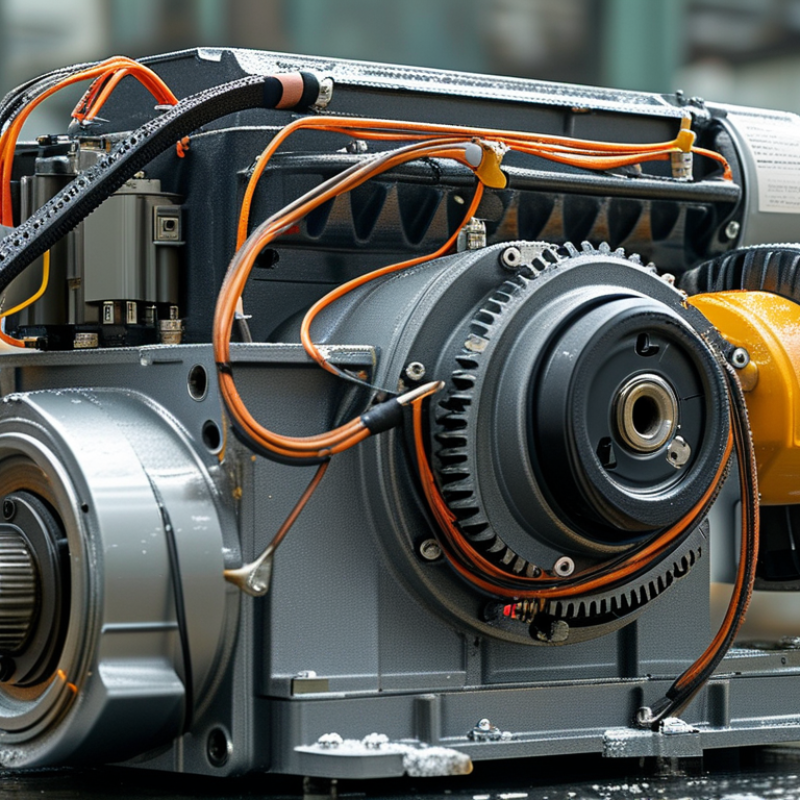
How to Choose an Electric Gear Motor in 2026?

What Is an Electric Gear Motor and How Does It Work?

How to Choose an Electric Gear Motor in 2026?

An electric gear motor combines an electric motor with a gearbox. The motor creates rotation, while the gears reduce speed and increase usable torque. A controller usually regulates voltage, current, direction, and speed. In practical testing, the shaft should start smoothly under its real load, not only spin freely on a workbench. Gear teeth transfer motion through several stages, but every stage creates friction and heat. The output speed depends on motor speed and the selected gear ratio. Higher ratios provide more torque, but they also reduce output speed. Simple enough.

Choose the motor by checking continuous torque, starting torque, duty cycle, voltage, noise, and available space. Measure the actual load, including friction, acceleration, and repeated stops. A conveyor may need steady torque, while a robotic joint may need low backlash and precise positioning. Efficiency matters because wasted energy becomes heat inside the housing. I once underestimated starting torque on a compact mechanism; it worked unloaded, then stalled repeatedly. That mistake showed why safety margins should be calculated, not guessed.

Tips: Read the manufacturer’s torque-speed curves and confirm whether ratings are continuous or temporary. Check mounting dimensions, shaft size, protection rating, and thermal limits. Leave room for ventilation. If the application reverses often, ask about gear wear and backlash. Test the complete assembly for several hours, then inspect temperature, vibration, and unusual noise. A quieter motor is not always a better motor. Reliability depends on matching the motor, gearbox, controller, and load.

Which Performance Specifications Should You Define First?

How to Choose an Electric Gear Motor in 2026?

Which Performance Specifications Should You Define First?

Begin with the load, not the motor catalogue. Measure the required output torque at the actual shaft speed. Use torque equals force multiplied by radius. Record both continuous torque and peak torque during startup, jams, or sudden direction changes. A conveyor moving 40 kilograms may need modest running torque but much higher starting torque. Do not guess this value.

Define the duty cycle in real operating terms. State running minutes, stopping minutes, reversals, and starts per hour. A motor running for ten minutes may need less thermal capacity than one running continuously. Confirm the supply voltage, frequency, controller limits, and acceptable speed range. Then check gearbox efficiency, backlash, shaft load, mounting position, and noise. Small details become expensive problems later.

Environment also changes the specification. Identify temperature, dust, moisture, vibration, and cleaning methods. A sealed enclosure may be necessary near washdown areas. Ask for rated torque at your working speed, not only the advertised maximum. Include a service factor, but avoid excessive oversizing. It can reduce efficiency, increase cost, and create control problems. My own calculation sheets have missed acceleration time before. A physical test exposed it. Prototype under the hardest expected condition, and measure current, temperature, noise, and output speed after several cycles.

How to Choose an Electric Gear Motor in 2026?

Which Performance Specifications Should You Define First?

How to read this chart: Define the required continuous output torque and output speed before selecting voltage, gearbox ratio, or motor technology. The operating points below represent realistic engineering targets for common low-voltage gear-motor applications. Output mechanical power is calculated as P = T × 2π × n ÷ 60, where T is torque in N·m and n is speed in rpm.

After torque and speed, confirm duty cycle, starting torque, allowable backlash, efficiency, noise, thermal limits, ingress protection, and available supply voltage. Select the motor using continuous requirements, then verify peak-load and stall conditions.

How Do You Match Motor Type, Gear Ratio, and Load Requirements?

Choosing an electric gear motor starts with the load, not the catalog. The International Energy Agency estimates motor-driven systems consume roughly half of global electricity. Small sizing errors therefore affect both performance and energy use. Measure the real load.

Record starting torque, running torque, speed, duty cycle, and shaft orientation. A conveyor moving 80 kilograms may need modest running torque but much higher starting torque. Calculate torque as force multiplied by radius, then add a practical safety margin. Do not guess.

Select the motor type from the operating environment. An induction motor suits steady industrial duty, while a permanent-magnet motor can improve efficiency under variable loads. The U.S. Department of Energy’s Motor Systems Market Assessment reports that motor systems use about 68% of electricity in U.S. manufacturing. Efficiency deserves attention.

Choose the gear ratio from required output speed. A higher ratio increases output torque, but gearbox losses reduce the result. For example, a 1,500 rpm motor with a 30:1 ratio produces about 50 rpm before slip and losses. Check the gearbox’s rated torque, thermal capacity, backlash, and shock rating. IEC 60034-30-1 efficiency classes help compare motor efficiency, but they do not replace application testing. My practical mistake has been trusting calculated torque without measuring acceleration. Field measurements often reveal brief overloads that spreadsheets miss.

What Environmental and Installation Factors Affect Your Selection?

How to Choose an Electric Gear Motor in 2026?

Selection starts with the air, not the catalogue. Ambient temperature, altitude, moisture, dust, and chemical exposure change a motor’s real output. IEC 60034-1 requires stated operating conditions, but installers must verify site deviations. At high altitude, thinner air removes less heat. That margin disappears quickly. In enclosed cabinets, measure the actual internal temperature, not the room temperature. For washdown areas, select an enclosure with an appropriate IP rating under IEC 60529. Salt air and chemical vapors also accelerate corrosion. ISO 12944 corrosion categories can help define the required protection level.

Installation details are equally decisive. Check mounting orientation, shaft loads, gearbox ratio, starts per hour, duty cycle, and available maintenance space. A motor that matches the rated torque may still fail under frequent reversing or shock loads. The U.S. Department of Energy’s 2023 Motor Systems Market Assessment estimates motor-driven systems consume nearly 70% of industrial electricity, so small efficiency losses can become expensive. Confirm whether a variable-speed drive will control the motor, then check cable length, braking, grounding, and heat at low speed. I have seen compact units overheat because airflow depended on shaft speed. The specification looked correct. The installation was not. Build in a thermal margin, record measured conditions, and challenge every “standard” assumption before approval.

How Can You Compare Efficiency, Controls, Safety, and Lifetime Cost?

Choosing an electric gear motor in 2026 requires more than checking rated power. Compare efficiency across the full duty cycle, not only at peak load. A motor running near its ideal load wastes less energy and produces less heat. Record speed, torque, starts per hour, and daily operating time. These details often reveal a better choice than a higher-rated motor.

Tips: Request efficiency data at several loads. Check gearbox losses, standby consumption, and expected service intervals. Calculate lifetime energy costs using local electricity rates. A cheaper purchase price can become expensive after years of continuous operation.

Controls deserve equal attention. Confirm compatibility with the controller, sensors, braking method, and communication system. Smooth speed control can reduce mechanical shock and maintenance. Safety features should include overload protection, thermal monitoring, guarded moving parts, and a reliable emergency stop circuit. Review the motor’s enclosure rating when dust, moisture, or cleaning sprays are present. During practical evaluations, I would measure temperature after extended operation, not after five quiet minutes. That shortcut can mislead. Consider installation labor, replacement parts, downtime, and disposal costs. Lifetime cost is a forecast, so document your assumptions and revisit them when the workload changes.

How to Choose an Electric Gear Motor in 2026? - How Can You Compare Efficiency, Controls, Safety, and Lifetime Cost?

Practical comparison of common electric gear-motor configurations for industrial and commercial equipment

Motor Configuration Typical System Efficiency* Control and Speed Capability Safety and Protection Considerations Typical Design Life** Maintenance and Reliability Initial Cost Index*** Best-Fit Applications
Brushed DC Gear Motor 70–85%
Efficiency decreases with brush wear, low-load operation, and inefficient gearing.
Simple voltage or PWM control; broad speed adjustment is possible, but speed regulation under changing load is limited without feedback. Requires current limiting, thermal protection, and suitable suppression of brush-generated electrical interference. Not ideal for explosive or highly contaminated environments unless specifically protected. 2,000–10,000 operating hours
Brush and commutator wear are usually the limiting factors.
Moderate maintenance. Brushes may require periodic inspection or replacement. Simple electronics and low starting cost can be advantageous. 100
Reference configuration
Intermittent-duty conveyors, small actuators, adjustable mechanisms, and cost-sensitive equipment.
Brushless DC Gear Motor 80–92%
Higher efficiency and lower heat generation than brushed designs at comparable operating points.
Electronic commutation through a controller; good speed range and dynamic response. Hall sensors or sensorless control may be used. Controller should include overcurrent, overvoltage, undervoltage, stall, and overtemperature protection. Correct electromagnetic compatibility design is important. 20,000–40,000 operating hours
Life is generally governed by bearings, gearbox loading, temperature, and lubrication.
Low routine maintenance because there are no brushes. Requires compatible drive electronics and correct motor-controller matching. 135
Typical normalized index
Variable-speed conveyors, fans, pumps, automated handling systems, and applications requiring frequent starts and stops.
Three-Phase Induction Gear Motor 75–90%
Efficiency is strongest near the rated load and can fall significantly at light load or low speed.
Direct-on-line operation is simple; a variable-frequency drive provides adjustable speed, ramp control, braking, and diagnostics. Requires correctly rated overload protection, grounding, short-circuit protection, and drive-compatible insulation. Low-speed operation may require additional motor cooling. 20,000–40,000 operating hours
Proper alignment, cooling, lubrication, and load control are essential.
Robust and widely serviceable. Gearbox oil, seals, bearings, and mounting alignment require scheduled inspection. 125
Typical normalized index
Continuous-duty conveyors, mixers, pumps, compressors, and rugged industrial machinery.
Permanent-Magnet Synchronous Gear Motor 85–95%
High efficiency over a broad operating range, especially where variable speed and partial-load operation are frequent.
Requires an electronic inverter or servo drive. Provides accurate speed control, high torque density, and strong regenerative capability when properly configured. Drive protection is required for overcurrent, overtemperature, overspeed, and regenerative voltage. Permanent magnets can produce voltage during mechanical rotation. 20,000–40,000 operating hours
Mechanical components and thermal conditions normally determine service life.
Low routine maintenance, but commissioning and drive tuning are more demanding. High temperatures can reduce magnet performance. 170
Typical normalized index
High-duty-cycle automation, energy-sensitive systems, precision conveyors, robotics, and compact high-torque equipment.
Stepper Motor with Gear Reduction 50–80%
Efficiency can be low because current is often maintained while stopped or holding position.
Open-loop positioning is simple; microstepping improves smoothness but does not guarantee position under overload. Closed-loop versions improve stall detection. Requires current control and thermal monitoring. Stall, resonance, and excessive acceleration can cause lost motion or overheating. 10,000–30,000 operating hours
Actual life depends strongly on temperature, duty cycle, bearing load, and gearbox selection.
Few electrical wear parts, but continuous holding current creates heat. Gear backlash and mechanical resonance must be evaluated. 120
Typical normalized index
Indexing, positioning, dosing, labeling, and low-to-moderate speed motion where precise incremental movement is required.

* Efficiency basis: Typical total motor-and-gearbox efficiency at or near rated load. Actual results vary with motor size, gear ratio, gearbox type, speed, temperature, lubrication, and duty cycle. Helical and planetary gear stages commonly achieve about 90–97% per stage, while worm gearing may range from approximately 50–90% depending on ratio, load, and lubrication.

** Service-life basis: These are engineering planning ranges, not guarantees. Bearing life is commonly estimated using rolling-bearing calculations, while gearbox life depends on transmitted torque, shock loading, lubrication, sealing, and operating temperature.

*** Cost index: Normalized comparison where a basic brushed DC gear motor equals 100. It is not a market quotation. For lifetime cost, include purchase price, controller, installation, energy consumption, scheduled maintenance, downtime risk, replacement parts, and disposal.

Selection rule: Choose the motor from the complete duty cycle—not only peak torque. Confirm continuous torque, acceleration torque, starting frequency, output speed, radial and axial loads, ambient temperature, ingress protection, braking requirements, control architecture, and required safety functions.

FAQS

What is an electric gear motor?

It combines an electric motor and a gearbox. The motor creates rotation. The gears reduce speed and increase usable torque. A controller can manage voltage, current, direction, and speed.

How does the gear ratio affect performance?

A higher gear ratio usually produces more output torque. It also reduces output speed. Gear stages create friction and heat. The final speed depends on motor speed and the selected ratio.

How should I choose the correct motor size?

Measure the real load, including friction, acceleration, and repeated stops. Check continuous torque and starting torque. A conveyor may need steady torque. A robotic joint may need precise positioning and low backlash.

Why is starting torque important?

Starting torque helps the shaft begin moving under its actual load. A motor may spin freely on a bench but stall in service. I once underestimated this requirement. The mechanism stopped repeatedly.

Which environmental conditions matter during selection?

Check temperature, altitude, moisture, dust, chemicals, and salt air. Thin air removes less heat at high altitude. Enclosed cabinets can become much hotter than the room. Measure the real internal temperature.

What installation details should I verify?

Check mounting orientation, shaft loads, gear ratio, starts per hour, and duty cycle. Leave space for ventilation and maintenance. Confirm cable length, grounding, braking, and low-speed heat.

How can I compare efficiency and lifetime cost?

Compare efficiency across the complete duty cycle, not only at peak load. Record speed, torque, operating hours, and daily starts. Include energy, maintenance, replacement parts, labor, and downtime. A cheap motor may cost more later.

What controls and safety features are useful?

Confirm compatibility with controllers, sensors, braking systems, and communication equipment. Useful protections include overload monitoring, thermal sensing, guarded moving parts, and emergency stopping. Test the complete assembly for several hours. Five quiet minutes prove little.

Conclusion

Choosing the right Electric Gear Motor in 2026 starts with understanding how it combines an electric motor with a gearbox to convert electrical energy into controlled rotational motion. Begin by defining the required speed, torque, duty cycle, starting load, operating time, and precision. These figures help determine the suitable motor technology, gear ratio, and load capacity while preventing overheating, excessive wear, or inefficient operation.

Selection should also account for installation space, mounting position, noise, temperature, dust, moisture, vibration, and maintenance access. Compare available options by energy efficiency, speed control, braking needs, overload protection, and compatibility with the control system. Safety features and serviceability are equally important for dependable long-term operation. Instead of focusing only on the purchase price, evaluate energy consumption, replacement parts, downtime, maintenance, and expected service life. A balanced assessment of performance, environment, controls, safety, and lifetime cost will help you choose a reliable Electric Gear Motor for the application.

Liam

Liam

Liam is a dedicated marketing professional with a profound expertise in the industry, where he excels at highlighting the unique advantages of our core products. With a keen understanding of market trends and consumer needs, Liam frequently updates our company’s professional blog, providing......